
China Top 10 Power Elevated Work Platform Training Providers
China’s elevated work platform sector serves construction sites, warehouses, factories, and maintenance teams. Choosing a training provider is not a paperwork exercise. It can shape how an operator checks a platform, reads a site, and responds when conditions change.
Dr. David Michaels, an occupational safety researcher and former U.S. Assistant Secretary of Labor, has emphasized prevention as a foundation of worker protection. A practical way to apply that principle here is: “Good training helps workers spot hazards before a platform moves.” This is a concise safety principle, not a verified verbatim quotation from Michaels.
Power Elevated Work Platform Training should connect classroom instruction with realistic equipment practice. Learners need to inspect controls, identify overhead obstructions, assess ground conditions, and understand emergency lowering procedures. Small details matter. A sloped loading area or a low ceiling can change the task entirely.
This guide introduces ten providers operating in China and the factors worth comparing. These include course scope, instructor experience, hands-on access, assessment methods, and support for different platform types. A provider’s claims deserve careful review; a polished brochure alone proves little. Training quality can also vary by location and course delivery. That uncertainty should be acknowledged, not hidden. Use this list as a starting point, then confirm current course details directly with each provider.
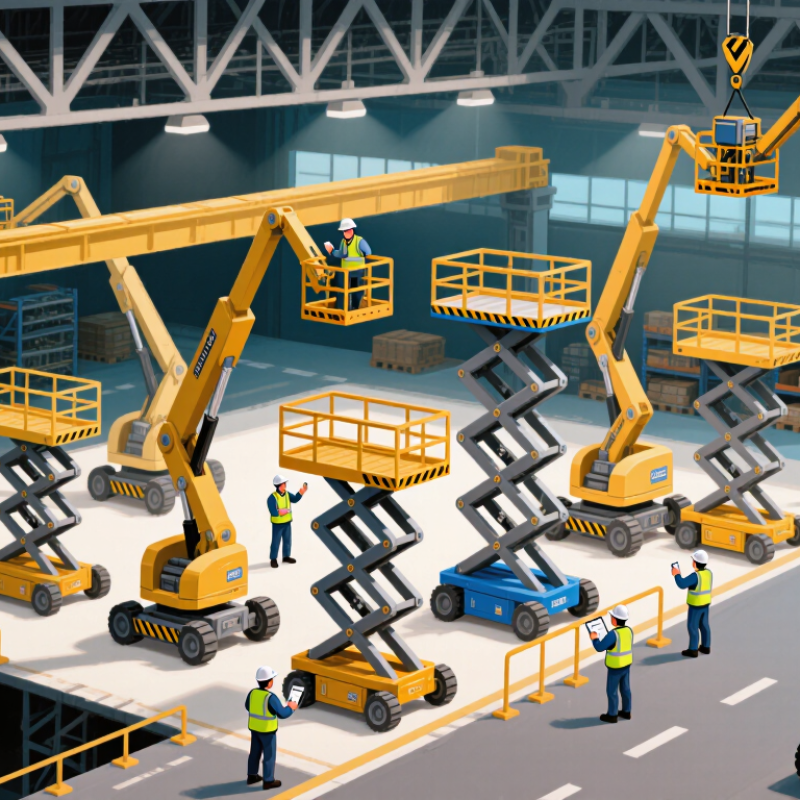
Power Elevated Work Platform Training in China: Definition and Scope
China Top 10 Power Elevated Work Platform Training Providers
Power Elevated Work Platform Training in China: Definition and Scope
Power elevated work platform training prepares workers to select, inspect, operate, and park powered equipment used for temporary work at height. In China, training may cover scissor lifts, boom lifts, and vertical-mast platforms. Each type has different controls, reach, and stability limits. A complete course combines classroom instruction with supervised practice, pre-use checks, ground assessment, load limits, and emergency procedures. It is more than learning joystick movements. That distinction matters.
The International Powered Access Federation’s Global Safety Report 2024 recorded 1,001 reported incidents and 202 fatalities in 2023 across 20 countries. This is not China-only data, nor does it measure risk per hour worked. Still, it highlights why training should address falls, overturns, overhead hazards, and emergency response. Workers should practise on equipment similar to what they will use at the job site. Conditions change; training should reflect that.
Tips: Ask the provider to demonstrate emergency lowering and rescue steps. Check that learners practise on realistic surfaces, such as a firm floor with uneven patches clearly marked. A checklist helps, but it cannot replace careful observation. Some courses may move too quickly through practical assessment; that deserves a closer look.
China Top 10 Power Elevated Work Platform Training Providers - Power Elevated Work Platform Training in China: Definition and Scope
This table describes ten common provider types, not a verified or ranked directory of specific organizations. “Power elevated work platform” is understood here as a powered mobile elevating work platform (MEWP), such as a scissor lift or boom lift. Course availability, equipment coverage, assessment, and certificate recognition vary; confirm these details with each training provider and the relevant employer or regulator.
| No. | Provider type | Typical training scope | Practical modules | Best suited for | What to verify |
|---|---|---|---|---|---|
| 1 | Independent powered-access training providers | Operator theory and hands-on familiarization for selected MEWP classes and configurations. | Pre-use checks, controls, safe travel, positioning, shutdown, and emergency lowering. | Employers training operators across mixed equipment fleets. | Trainer competence, machine types covered, assessment method, and certificate scope. |
| 2 | Equipment manufacturers’ or authorized service-channel trainers | Machine-specific familiarization based on the relevant model’s operating instructions. | Controls, rated capacity, alarms, charging or refueling, daily inspection, and emergency procedures. | Users operating particular equipment models or newly delivered machines. | Whether instruction includes practical assessment and applies to the exact machine configuration. |
| 3 | MEWP rental and access-equipment companies | Site or customer familiarization, often focused on rented equipment and safe-use requirements. | Handover checks, machine limits, work-area hazards, ground conditions, and emergency contacts. | Rental customers needing equipment-specific orientation before use. | Whether the session is familiarization only or includes full operator training and competence assessment. |
| 4 | Occupational health and safety training institutions | Work-at-height risk awareness and safe-work practices that may complement equipment operation training. | Fall hazards, fall-protection planning, PPE use, access control, and incident response. | Workers, supervisors, and safety personnel on construction or industrial sites. | Whether the course covers MEWP operation or only general work-at-height safety. |
| 5 | Vocational and technical training schools | Structured technical instruction that may include mobile access equipment, depending on facilities and curriculum. | Equipment principles, inspection basics, safe operating practices, and supervised exercises where available. | New entrants and employers seeking classroom-based foundational training. | Access to actual MEWPs, instructor experience, course hours, and practical evaluation. |
| 6 | Construction and industrial contractors’ in-house training teams | Employer-specific induction and task training aligned with site procedures and equipment used on the project. | Permit or authorization processes, site traffic, overhead hazards, exclusion zones, and rescue arrangements. | Employees and subcontractors working under a particular site’s rules. | Trainer qualifications, documented assessment, refresher policy, and compatibility with external requirements. |
| 7 | Specialist safety consultancies | Customized training and risk-control support for specific tasks, sites, or mixed MEWP fleets. | Task risk assessment, safe work planning, hazard recognition, and incident prevention exercises. | Organizations needing tailored programs or a review of existing work-at-height controls. | Practical equipment access, instructor experience, deliverables, and whether assessment is included. |
| 8 | Large-facility or enterprise training centers | Site-specific operator development for warehouses, factories, logistics facilities, or maintenance teams. | Aisle and floor conditions, pedestrian segregation, indoor operation, charging areas, and routine checks. | Operators working repeatedly in a controlled facility environment. | Training coverage for the actual lift type, site hazards, and how operator competence is recorded. |
| 9 | Online learning and blended-learning providers | Theory modules that can support, but do not by themselves replace, practical equipment training. | Terminology, hazard awareness, basic operating principles, and knowledge checks. | Pre-course learning, refresher knowledge, or geographically distributed workforces. | Language, course currency, learner verification, and arrangements for supervised practical assessment. |
| 10 | Industry associations and professional safety networks | Safety seminars, technical guidance, or member education; direct operator courses may not be available. | Good practices, hazard communication, equipment-selection considerations, and safety management. | Safety managers, trainers, employers, and other industry stakeholders. | Whether the offering is formal operator training, a seminar, or general information only. |
Definition and scope of MEWP training
| Dimension | Description |
|---|---|
| Equipment covered | Powered mobile elevating work platforms used to position people, tools, and materials at height, commonly including scissor lifts and boom-type lifts. Exact machine categories depend on the course. |
| Core learning outcomes | Recognize equipment limits and hazards; perform pre-use checks; operate controls safely; position and travel appropriately; secure the machine after use; and understand emergency lowering and rescue arrangements. |
| Practical scope | Where a course claims operator competence, practical instruction should use relevant equipment and include an assessment suited to the machine and operating environment. A classroom or online module alone is not a practical operating assessment. |
| Work-at-height interface | Training should address fall and entrapment hazards, overhead obstructions, ground and floor conditions, traffic, weather or other environmental limits, and site-specific fall-protection and rescue procedures. |
| China-specific qualification check | Do not assume that a provider’s completion certificate is a government-issued qualification or is accepted for every task. Employers should verify applicable Chinese requirements for the work, site rules, worker authorization, and any required training or assessment with the relevant authorities. |
| Selection checklist | Confirm equipment types, theory and practical hours, instructor competence, language, assessment criteria, certificate wording, refresher arrangements, and whether the training matches the intended job and workplace. |
Related Posts
-
The Comprehensive Handbook for Mastering Mobile Elevated Work Platform Training
-

Why Is Work Platform Training Essential for Success?
-

Exploring the Diverse Types of Mobile Elevated Work Platforms: A Comprehensive Comparison
-
Ansi Safety Standards Tips for Buyers at 2026 Canton Fair?
-
Power Elevated Work Platform Training Tips and Importance?
-
Top 10 Mobile Aerial Platforms for Efficient Construction Tasks?