How to Choose American Mast Climbers in 2026?
Choosing American Mast Climbers in 2026 requires more than comparing platform height and rental price. A mast climber may look impressive on a specification sheet, yet fail your project through poor tie-in planning, limited service support, or unsuitable loading conditions. The safest choice begins at the workface, where brick pallets, façade panels, tools, and workers compete for deck space.
Peter Douglas, CEO of the International Powered Access Federation, has often emphasized this principle: “The right machine is the one that fits the task, the site, and the people using it.” His statement captures the practical challenge behind American Mast Climbers selection. Buyers should examine rated capacity, platform dimensions, mast configuration, climbing speed, emergency lowering, wind limits, and manufacturer documentation. Training quality matters equally. A powerful machine cannot compensate for an unprepared crew.
Walk the site before requesting quotations. Check ground strength, overhead obstructions, façade setbacks, tie-in locations, and delivery access. Ask whether local technicians can respond quickly when a limit switch fails on a cold morning. Review inspection records and confirm that operators understand the load chart, not merely the control panel.
The cheapest option may not be economical. Downtime leaves workers standing beside unfinished walls. That detail is easy to underestimate.
This guide also recognizes an uncomfortable truth: no equipment comparison can remove every project risk. Site conditions change, drawings contain omissions, and experienced teams still make mistakes. Therefore, the strongest choice combines verified engineering information, competent supervision, responsive support, and honest reflection after each lift.
What Are American Mast Climbers and How Do They Work?
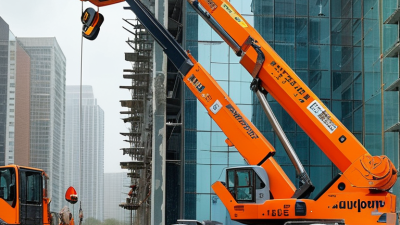
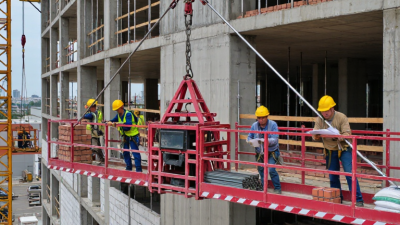
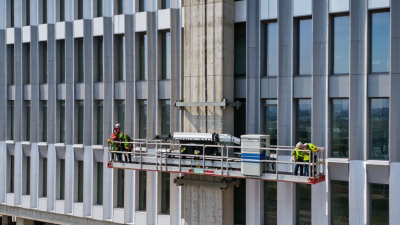
American mast climbers are powered work platforms that rise beside a building on vertical steel masts. Unlike suspended platforms, they lift workers and materials from below. A rack-and-pinion drive moves the platform upward, while mast sections, anchors, and base frames maintain alignment. Operators can stop at multiple elevations, creating a steadier work surface for masonry, cladding, insulation, and window installation.
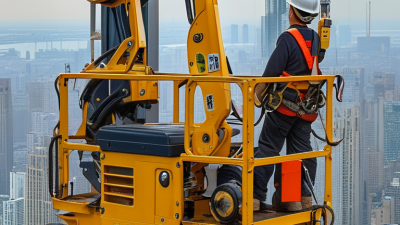
The mechanism looks simple, but the engineering is not. Load sensors, emergency brakes, guardrails, limit switches, and platform gates must work together. Mast ties transfer horizontal forces into the structure, especially when the platform stands high above ground. The Occupational Safety and Health Administration requires scaffold systems to support their own weight and four times the maximum intended load under 29 CFR 1926.451. That requirement is a useful baseline, not permission to ignore the manufacturer’s engineering plan.
Safety data deserves attention. The International Powered Access Federation’s Global Safety Report 2024 recorded 118 powered-access fatalities across 20 countries during 2023. Mast climbers are not identical to every machine in that dataset, so direct comparisons can mislead. Still, the figure shows why wind readings, anchorage checks, and operator training matter. In 2026, selection should match façade geometry, platform length, rated capacity, travel speed, and local wind limits. I would also question impressive productivity claims. A faster platform may create slower work if loading, tying, or daily inspections become complicated.
How to Choose American Mast Climbers in 2026?
What Are American Mast Climbers and How Do They Work?
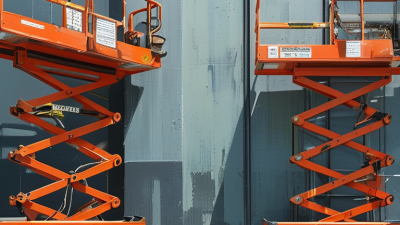
Mast climbers are electrically powered, rack-and-pinion work platforms that travel vertically along a mast fixed to a building or supporting structure. They are commonly selected for facade installation, masonry, cladding, glazing, maintenance, and other projects that require stable access across multiple levels.
The chart shows representative rated platform-load ranges by mast arrangement. Actual capacity depends on platform length, tie-in spacing, mast height, wind limits, loading distribution, and local safety requirements. When choosing a unit in 2026, confirm the required load, working height, platform configuration, power supply, emergency lowering system, guardrails, and applicable regulations.
Representative industry ranges for comparison only. Always verify the certified load chart and installation requirements for the specific equipment configuration.
Which Project Requirements Should Guide Your Mast Climber Choice?
How to Choose American Mast Climbers in 2026?
Which Project Requirements Should Guide Your Mast Climber Choice?
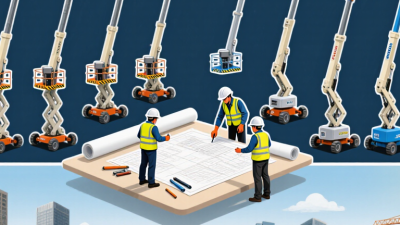
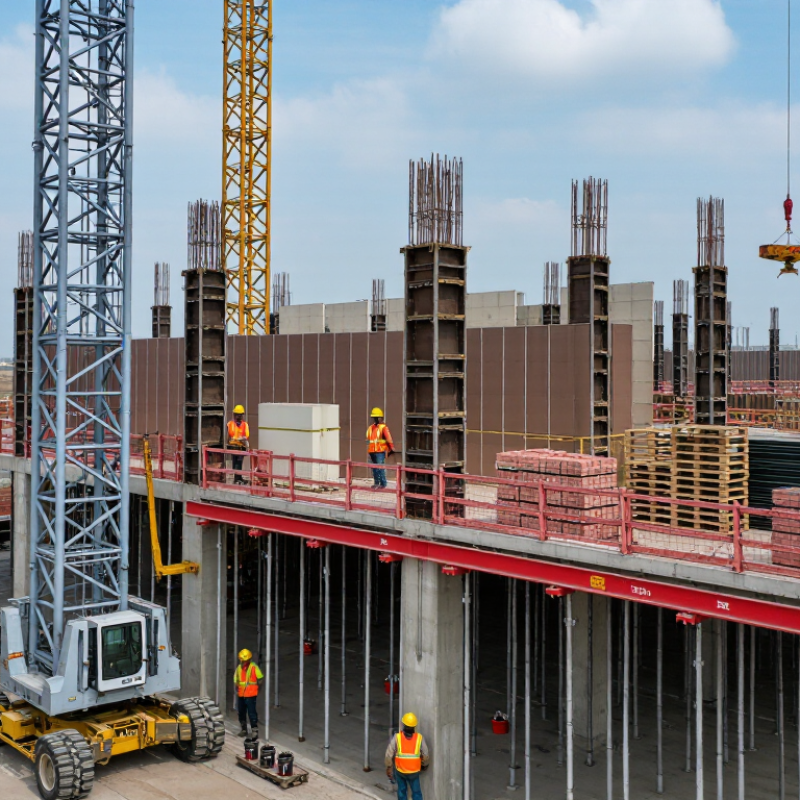
The building envelope should drive your mast climber decision, not rental availability. Measure elevation, façade length, loading zones, and tie locations before comparing machines. A narrow urban site may need a compact base and precise platform positioning. A restoration project may require adjustable decks for uneven façades. These details affect installation time, worker access, and material flow.
Payload deserves careful attention. Calculate workers, tools, mortar, panels, and waste together. Then allow practical reserve capacity. An overloaded platform creates avoidable risk.
OSHA recorded 395 fatal construction falls to lower levels in 2022, within 1,069 construction fatalities overall.
That data supports disciplined access planning, not rushed equipment selection. Consider platform width, emergency lowering, guardrails, interlocks, and trained operators. Ask for inspection records and documented maintenance history.
Weather and building movement also matter. Wind exposure, slab edges, anchors, and tie spacing should match the engineer’s design. Check electrical supply, ground conditions, delivery access, and local inspection requirements early.
ANSI A92.9 provides recognized requirements for mast-climbing work platforms, while OSHA rules govern safe construction use. Independent verification is valuable. Specifications can look complete and still miss a difficult corner or weak loading point. Field experience sometimes reveals the gap.
Recheck the plan.
What Should You Check When Evaluating Suppliers and Long-Term Costs?
How to Choose American Mast Climbers in 2026?
What Should You Check When Evaluating Suppliers and Long-Term Costs?
A reliable supplier should provide complete technical records, not only a polished quotation. Check load charts, platform dimensions, anchoring details, inspection procedures, and operator training. Ask who services the equipment after delivery. Slow answers can become expensive delays on a busy jobsite.
Visit a working project if possible. Watch how the mast climbs under real loads, how quickly technicians respond, and whether replacement parts are available locally. Review maintenance logs, warranty limits, delivery timelines, and documented compliance with applicable American safety requirements. A low purchase price may hide costly installation, storage, transport, or rental support fees.
Calculate the full operating cost.
Include energy use, inspections, planned maintenance, repairs, training, and downtime. Request a five-year cost model with clear assumptions. Suppliers may estimate perfect utilisation, but construction schedules rarely behave perfectly. Weather, changing elevations, and damaged components can alter the numbers quickly.
Do not ignore corrosion protection and component compatibility. Small differences matter. Ask for references from comparable building heights and project conditions. Speak with site managers, not only sales teams. Their criticism may reveal weaknesses that brochures leave out. I would also keep a contingency budget, because even well-maintained access equipment sometimes fails at the worst possible moment.