How to Choose the Best Top Climber Mast Climbing System?
Choosing the right Top Climber Mast Climbing System is critical for construction projects. According to the International Organization for Standardization, the construction sector accounts for 13% of global GDP. This emphasizes the importance of efficient machinery in improving productivity. However, not all mast climbing systems are created equal.
The market is vast and filled with options. Various statistics indicate that construction equipment failures cost companies billions each year. A reliable Top Climber Mast Climbing System minimizes risks and enhances safety. Factors like load capacity, working height, and ease of assembly should guide your choice. Many systems look appealing but may lack durability or proper support.
In many cases, users underestimate the importance of proper training. Reports show that nearly 40% of accidents in construction stem from inadequate equipment usage. Choosing a system that offers comprehensive training and support can prevent these unfortunate outcomes. Reflecting on these elements can lead to a more informed decision, ultimately benefiting both workers and project timelines.

Understanding Mast Climbing Systems and Their Applications
Mast climbing systems offer unique advantages in construction and maintenance projects. They provide access to high-rise buildings, improving efficiency. Workers can move vertically and horizontally, reducing time spent on transportation. However, choosing the right system can be complex.
Understanding the applications of mast climbing systems is crucial. These systems are versatile in many environments, from residential to commercial settings. They are ideal for facade work, window installations, and painting. However, not all systems suit every project. One must consider weight limits and space requirements. Some projects may require adjustments to fit the system.
There are various factors to ponder when selecting a mast climbing system. The height of the building, load capacity, and site conditions play significant roles. Sometimes, mistakes in choosing a system can lead to inefficiency or safety hazards. It is essential to conduct thorough site evaluations.
Balancing cost with functionality may be challenging but necessary for project success.
Key Factors to Consider When Choosing a Mast Climbing System
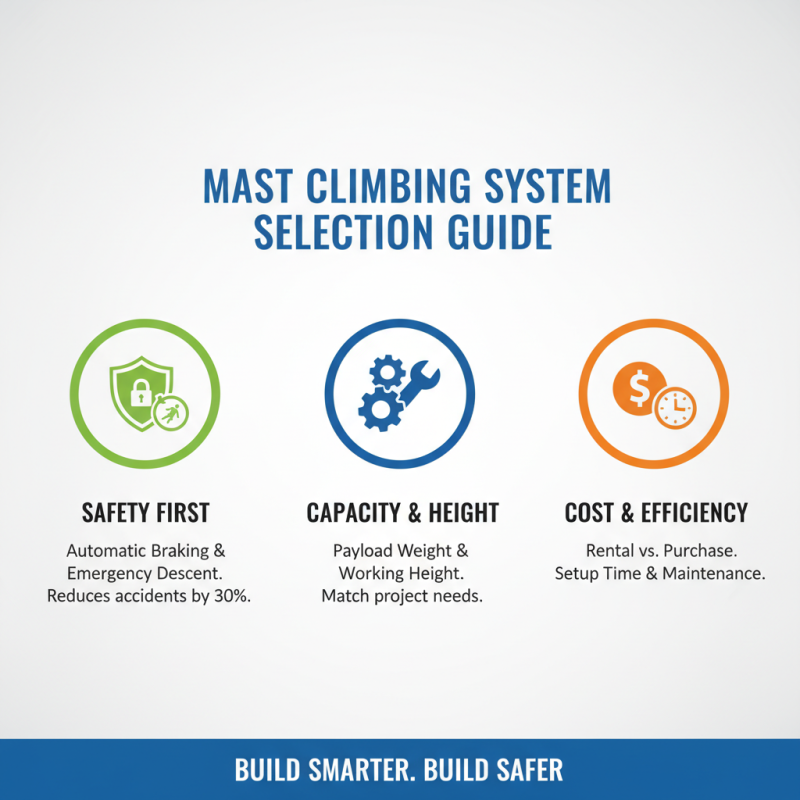
When selecting a mast climbing system, consider several key factors. Safety should be a top priority. According to a recent industry report, over 30% of construction accidents involve inadequate safety measures. Therefore, ensure that the system has robust safety features, such as automatic braking and emergency descent systems.
Next, evaluate the load capacity. Many systems support between 1000 to 3000 kg. It’s essential to analyze your project’s needs carefully. Ensuring the system can handle the required weight prevents operational failure. Reassess the project regularly to confirm the system remains suitable for any changes.
Another factor is the installation process. Some systems require advanced technical skills, while others are more user-friendly. Complicated installations can lead to project delays. Cost is also a critical aspect. A report indicated that the initial investment can range widely. Balance your budget with the system's long-term benefits. Reflect on these elements before making a decision.
Comparison of Top Climber Brands and Models Available
When selecting a top climber mast climbing system, it’s crucial to compare various models. Several industry reports indicate that the market is growing at a rate of about 5% annually. This growth reflects an increased demand for safer and more efficient climbing systems. However, not all products offer the same quality or performance.
For instance, some systems feature advanced safety protocols, while others lack essential safety measures. A recent survey found that only 45% of users felt fully confident in their equipment. Users reported issues like slow ascent speeds and stability concerns. These problems highlight the importance of extensive product testing.
When evaluating brands, consider factors such as weight capacity and ease of setup. Many systems claim to support 1,000 pounds, but real-world performance may differ. Feedback from professionals indicates that not all models meet their specified ratings. A thorough review of user experiences can provide valuable insights and help avoid potential pitfalls.
Safety Standards and Regulations for Mast Climbing Systems
Safety standards are crucial for mast climbing systems. These guidelines ensure the equipment operates reliably and protects workers. According to the American National Standards Institute (ANSI), all mast climbing systems should meet strict safety criteria. This includes load capacity, structural integrity, and emergency protocols. Recent industry reports indicate that nearly 30% of accidents occur due to equipment failure. This statistic highlights the importance of adhering to safety regulations.
Understanding load limits is essential. Operators need to know the maximum load a mast climbing system can handle. Exceeding these limits can lead to catastrophic failures. A study by the Occupational Safety and Health Administration (OSHA) revealed that improper load management contributes to a significant number of incidents. Workers on site often underestimate risks. Thus, training programs focusing on load calculations and equipment limitations are necessary.
Regular inspections of the mast climbing systems ensure compliance with safety standards. Wear and tear can affect functionality. Many operators neglect routine checks, risking employee safety. An estimated 15% of workers admit they do not conduct regular equipment inspections. This oversight is alarming. Furthermore, all personnel must understand emergency procedures. Clear communication can save lives in critical situations.
Maintenance Tips for Ensuring Optimal Performance of Mast Climbers
Maintaining a mast climbing system is crucial for optimal performance. Regular inspections should be scheduled. Check for wear and tear on the components. Look for signs of rust or corrosion. These can cause significant issues if neglected. Ensure all connectors and safety devices are functioning properly.
Cleaning the system is equally important. Dust and debris can obstruct moving parts. Use a soft cloth and appropriate cleaning agents. However, be cautious and avoid aggressive chemicals. Keep the motors free from obstacles. This can minimize the risk of mechanical failures.
Sometimes, users might overlook small issues. A slight noise or vibration can be ignored until it worsens. It’s vital to act on these early signs. Document any unusual behavior or performance. This information can be invaluable during maintenance checks. Raising awareness around these points can ensure safety and efficiency. After all, a well-maintained system enhances productivity and safety.
Maintenance Tips for Ensuring Optimal Performance of Mast Climbers