Choosing the right Climbing Platforms is a practical safety decision, not a simple equipment purchase. Height, surface conditions, load capacity, access frequency, and operator skill all matter. A platform that feels stable on a warehouse floor may behave differently on uneven ground or near exposed edges. Small details matter.
IPAF’s 2024 Global Safety Report recorded 118 powered access fatalities during 2023. Falls from platforms, electrocution, and machine overturns remained significant causes. These figures concern mobile elevating work platforms, a closely related access category. They show why selection must include inspection, training, guardrails, emergency lowering, and ground assessment. OSHA guidance also stresses fall protection, competent operation, and manufacturer instructions. Standards are useful. They are not magic.
Peter Douglas, former CEO of the International Powered Access Federation, has emphasized, “Safety is a shared responsibility.” That principle should guide every buying decision. Compare platform height, working load, deck dimensions, mobility, power source, and maintenance support. Consider the person carrying tools, not only the machine’s advertised capacity. Also check local regulations and supplier documentation before use.
The following ten tips turn technical specifications into practical questions. They help buyers compare models without relying on glossy photographs. Experienced operators should still challenge familiar assumptions. A trusted platform can become unsafe when conditions change. That is easy to forget. The best choice balances productivity, stability, operator comfort, and long-term serviceability. It may not be the cheapest option. It should be the one that performs predictably, task after task.
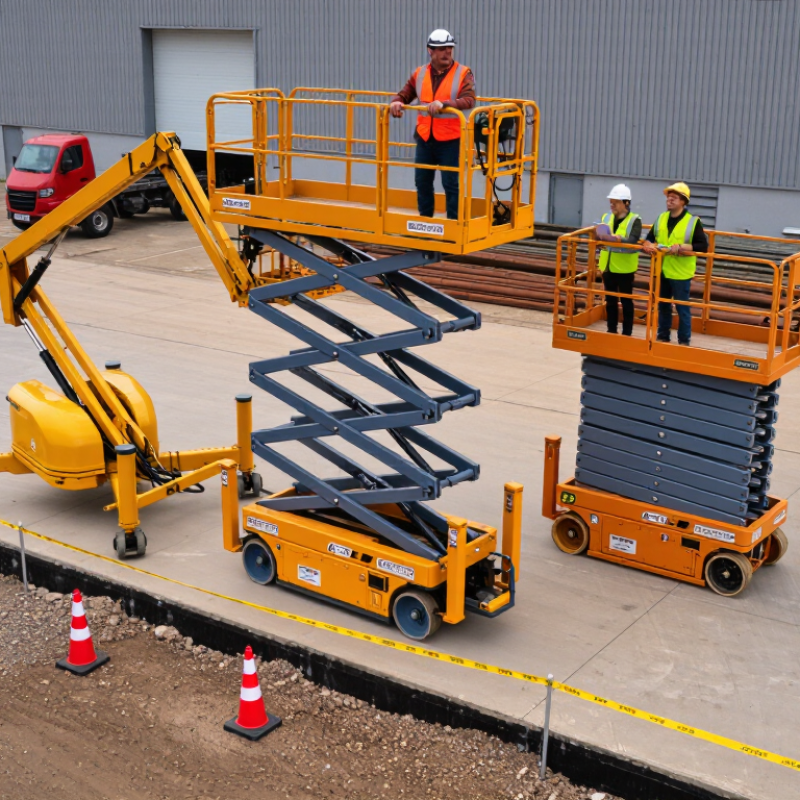
Platform selection should begin with height, not appearance. Low-level platforms suit stocking, inspection, and short indoor tasks. Extension ladders may work for brief access, but platforms provide better footing during hands-on work. For elevated maintenance, consider mobile elevating work platforms or fixed platforms.
OSHA recorded 395 fatal falls among 1,069 construction deaths in 2022. That figure makes task height a safety decision, not a convenience.
Load capacity must include the worker, tools, materials, and movement. A 120-kilogram worker carrying 25 kilograms already needs more than a 145-kilogram rating. Add a practical margin. It is easy to underestimate wet equipment or a full tool bag.
Check the platform’s rated capacity, working height, platform dimensions, and ground limitations. ANSI/ASSP A92 standards also emphasize design, inspection, training, and safe operation for mobile elevating platforms.
The climbing task matters just as much. Choose a wider deck for two-handed installation. Select a compact unit for narrow aisles and frequent repositioning.
Use guardrails and toe boards when the task requires extended work at height. Short tasks are not automatically low-risk.
I have seen planning stop at “Can it reach?” That question is incomplete. Ask whether the platform supports stable posture, controlled access, and a safe exit.
Weather, uneven flooring, and overhead obstructions may change the correct platform type. The perfect choice on paper can fail in a crowded work area.
10 Tips for Choosing the Best Climbing Platforms
When choosing a mobile elevating work platform, verify compliance before comparing height, reach, or price. ANSI A92 and EN 280 provide essential safety requirements for design, stability, controls, guarding, and emergency systems. The correct standard depends on the machine’s market, operating location, and applicable regulations. Standards also change, so check the current edition.
Ask for clear evidence, not vague claims. Review the conformity declaration, identification plate, operating manual, inspection records, and load chart. Confirm that the platform’s rated capacity includes workers, tools, and materials. Check emergency lowering controls in person. They should be visible, labeled, and usable from ground level. Small details matter.
A competent inspector should examine guardrails, gates, tires, outriggers, alarms, tilt sensors, and control functions. Test the machine on realistic ground conditions, including slopes and uneven surfaces. Wind limits deserve attention. A platform that feels stable indoors may react differently outdoors. I once focused too heavily on working height and overlooked access around the base. That was a useful correction. Reach, transport width, floor protection, and rescue planning can affect productivity as much as elevation. Keep training records and daily checks available for every operator. Compliance documents do not replace a site-specific risk assessment.
| No. | Selection Dimension | What to Verify | Relevant Facts and Practical Requirements | Selection Guidance |
|---|---|---|---|---|
| 1 | Applicable safety standard | Confirm that the machine documentation identifies the applicable design and operational standard, including the correct edition for the work location. | ANSI A92 is the North American MEWP safety-standard series. EN 280 covers mobile elevating work platforms in the European framework. Compliance should be supported by technical documentation, declarations, labels, and inspection records. |
Required Select equipment aligned with the regulations and standards accepted by the authority having jurisdiction. |
| 2 | Platform type and working height | Match the platform configuration to the required platform height, working height, outreach, and access path. | Scissor lifts provide primarily vertical access. Boom lifts provide vertical access combined with horizontal outreach. Vertical mast lifts are suited to compact, mostly indoor tasks. | Choose a scissor configuration for straight vertical work and a boom configuration where obstacles require outreach or positioning around structures. |
| 3 | Rated capacity and load distribution | Check the rated platform capacity, number of occupants, tools, materials, and any restrictions on platform extension or auxiliary attachments. | Rated capacity includes people, tools, and materials. The allowable load may vary with platform position, boom angle, outreach, or machine configuration. The load must remain within the manufacturer’s rated limits. | Calculate the maximum intended payload before selection and retain a safety margin rather than operating continuously at the limit. |
| 4 | Ground conditions and terrain | Review ground bearing capacity, slopes, surface conditions, holes, trenches, ramps, curbs, and indoor floor limitations. | Rough-terrain units generally use larger tires and terrain-oriented configurations. Indoor slab floors may require non-marking tires and lower floor-loading limits. Outriggers, if fitted, must be deployed on suitable surfaces. | Select a machine whose slope, gradeability, ground-clearance, tire, and floor-load specifications match the actual site. |
| 5 | Wind and weather limits | Confirm the permitted wind speed, weather restrictions, temperature range, and whether the platform is approved for indoor or outdoor use. | Outdoor-rated MEWPs have a specified maximum wind limit. Enclosed or sheltered locations can have different ventilation and weather considerations. Wind can affect stability, especially when platforms or materials create additional sail area. | Do not use the platform beyond its stated wind or weather limits; include weather monitoring in the work plan. |
| 6 | Fall protection and access | Inspect guardrails, midrails, gates, toe boards, platform entry points, anchorage points, and the required personal fall-protection arrangement. | Guardrails and gates are primary platform safeguards. Where a personal fall-protection system is required, the user must follow the machine instructions and the applicable workplace regulations. Tie-off points are not automatically suitable for every system or task. | Select equipment with complete, undamaged guardrail systems and clearly identified anchorage information. |
| 7 | Emergency and ground controls | Test emergency lowering, ground controls, platform controls, emergency stop functions, alarms, interlocks, and communication procedures. | MEWPs require accessible control and emergency systems appropriate to the machine design. Emergency lowering must be understood by people at ground level before work begins. | Prefer equipment with clearly labeled controls, practical ground-level access, and a documented rescue procedure. |
| 8 | Inspection and maintenance history | Review pre-use inspection records, periodic inspection reports, repair history, service intervals, and any outstanding defects or safety notices. | A pre-use inspection is required before operation, and formal inspection intervals depend on the applicable regulations, standard, manufacturer instructions, and site conditions. Defective safety-critical equipment must be removed from service until corrected. | Reject equipment with missing records, unresolved safety defects, damaged structural components, leaking hydraulics, or nonfunctional safety devices. |
| 9 | Operator training and site planning | Confirm operator familiarity with the specific machine, site-specific hazards, rescue arrangements, overhead obstructions, electrical risks, and traffic controls. | Training should cover safe operation, limitations, inspections, shutdown, emergency procedures, and hazard recognition. Operators must maintain required clearances from energized electrical conductors according to applicable rules. | Choose a platform only when trained operators, a competent person, and a documented task risk assessment are available. |
| 10 | Power source, emissions, and access logistics | Compare battery, electric, hybrid, diesel, or other approved power systems with the site’s ventilation, charging, refueling, noise, and transportation requirements. | Electric machines are commonly suited to indoor work where ventilation and noise control are important. Combustion-powered machines require attention to exhaust, fuel storage, fire controls, and indoor-air requirements. Charging areas need suitable electrical protection and ventilation where applicable. | Select the lowest-emission and quietest power source that still meets duty cycle, terrain, runtime, and lifting requirements. |
10 Tips for Choosing the Best Climbing Platforms
Compare rated loads before considering height. The rating must cover the worker, tools, and materials together. Tip 1: Leave a practical safety margin. Tip 2: Check whether the load applies to the entire platform or one section. Tip 3: Read the inspection label carefully. A high rating means little if the frame is damaged.
Platform size affects both comfort and control. Measure the work area, then compare it with the platform’s usable floor space. Tip 4: Allow room for both feet and essential tools. Tip 5: Check the entrance width and guardrail clearance. Tip 6: Confirm that the platform fits through doors, corridors, and storage spaces. Small details matter. A cramped platform can cause awkward reaching, even at a modest height.
Maximum working height needs careful interpretation. Some listings describe platform height, while others describe reach height. Tip 7: Identify the exact measurement used. Tip 8: Avoid stretching beyond the guardrails. Tip 9: Check the surface, wheels, locking systems, and stabilizers before every use. Tip 10: Match the platform to the floor conditions and task duration. I once underestimated tool weight during a short maintenance job. The platform felt stable, but movement became restricted. That mistake changed my checklist. I now test access, load, and working height together, not separately. Manufacturer instructions and qualified workplace guidance should confirm the final choice.
Assess stability before comparing height, reach, or price. A reliable platform should feel rigid under normal movement, with no rocking, twisting, or loose joints. I inspect the frame, deck, locking pins, and wheels before every use. Small defects matter. A platform is only as dependable as its weakest connection.
They should surround exposed edges and include a secure entry point. Test the gate, midrail, and toe board by applying firm hand pressure. Never treat a guardrail as a convenient ladder.
Extend them fully on firm, level ground, then verify each contact point. Soft soil, uneven paving, or hidden gaps can reduce stability quickly. I also check the manufacturer’s setup instructions because similar-looking platforms may have different support requirements.
A rating up to 12.5 m/s does not guarantee safe operation in every location. Buildings, corners, open roofs, and sudden gusts can create stronger local forces. Stop work when conditions become uncertain. Honestly, wind judgments are easy to underestimate, especially when the platform feels stable at ground level. Recheck weather readings before climbing and during longer tasks.
10 Tips for Choosing the Best Climbing Platforms
Select Platforms by Inspection Records, Training Needs, and Total Ownership Cost
A climbing platform should come with clear inspection records, not vague assurances. Check the platform’s identification number, inspection dates, load-test results, and repair history. Look for repeated faults near guardrails, access gates, wheels, and lifting points. Missing records are a warning sign. So is rushed paperwork.
Ask to see daily inspection sheets and scheduled maintenance reports. Confirm who completed each inspection and what corrective action followed. A platform may look bright and clean while hiding worn pins or cracked welds. Photos can help, but hands-on checks reveal more. I have learned that tidy documents do not always equal careful maintenance.
Training requirements should match the actual worksite. Operators may need instruction on stability, fall protection, emergency lowering, and uneven ground. Rescue practice matters, especially where access is narrow or weather changes quickly. Keep attendance records and refresh skills after long breaks. Short training is tempting, but it can leave serious gaps.
Calculate total ownership cost before focusing on the purchase price. Include delivery, setup, inspections, replacement parts, batteries, storage, and operator time. Add the cost of downtime when a fault stops a project. A cheaper platform can become expensive after several repairs. Rental may sometimes suit temporary work, although availability and transport charges can complicate that choice. Build a simple twelve-month estimate, then challenge every assumption.